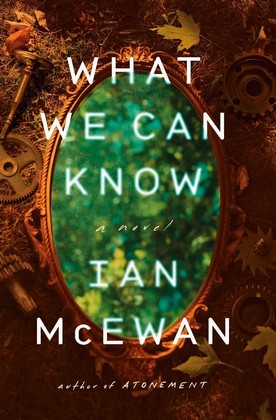
This is a literary novel. Not because it is long, dense, and difficult to read (it is none of those things). Rather, it is about literary subjects. The primary theme dwells on the art of biography. As the title suggests, what can we really know about the past, even if one is drowning in a sea of primary source material?
The first part of the book is set in the future, narrated by Tom Metcalf, a British academic in the year 2119. Living in a vastly altered world due to climate change and global conflicts, he has one important technology still available: the internet, now maintained by Nigerians.
The digital communications of the past 100+ years have been preserved and unencrypted. Thus, Tom can access emails, texts, and other electronic documents, as well as physical letters, diaries, and other papers in archives. His biographical subject is Vivien Blundy, the wife of a well-known and successful poet of the early 21st century, Francis Blundy.
The Blundys generated historic fascination because of an October 2014 party to celebrate Vivien’s 54th birthday. For the occasion, Francis wrote a special poem in her honor, “A Corona for Vivien,” which consisted of 15 interconnected sonnets. He made only one copy, written on vellum, and destroyed the drafts. After reading it to the dinner guests, Francis presented the scroll to Vivien—and it was never seen or read again.
Tom is working on Vivien’s biography with a secondary (or maybe primary) goal of finding the long-lost poem. He tells the reader about the state of the world, and how it came about. He discusses his job as a professor, his reasearch, and the story of Vivien’s life as he has gleaned it from her primary source materials and those of her husband and the guests at the party.
Tom makes clear that the humanities department, and literature in particular, is the red-headed stepchild of the academic world. He struggles with how well we can understand past lives, and his inability to convey the value of history to his students. His colleague—and love interest—in the department is Rose Church. While she sees his pursuit of Vivien’s story as obsessive, she supports his efforts…mostly.
Tom makes his case to the reader that the people of the past were much the same as those in the present, and by understanding the problems they dealt with, we can find solutions to current ones, and also some empathy for the long-departed. When he and Rose attempt a new course with this approach in mind, the students shut them down, declaring the past irrelevant.
The second part of the book, which I won’t spoil for you, is the result of Tom’s pursuit of Vivien and what he learns about her life.
Because I’m also writing a biography (and much of my work falls into that category), I found this story fascinating and relevant. I’m working with a much slimmer catalog of source material, yet I am attempting to resurrect a life with it. It will be mostly wrong. If you enjoy biographies, McEwan’s book will open your eyes to the problem of what author must assume in creating such works.
 Eilene Lyon